
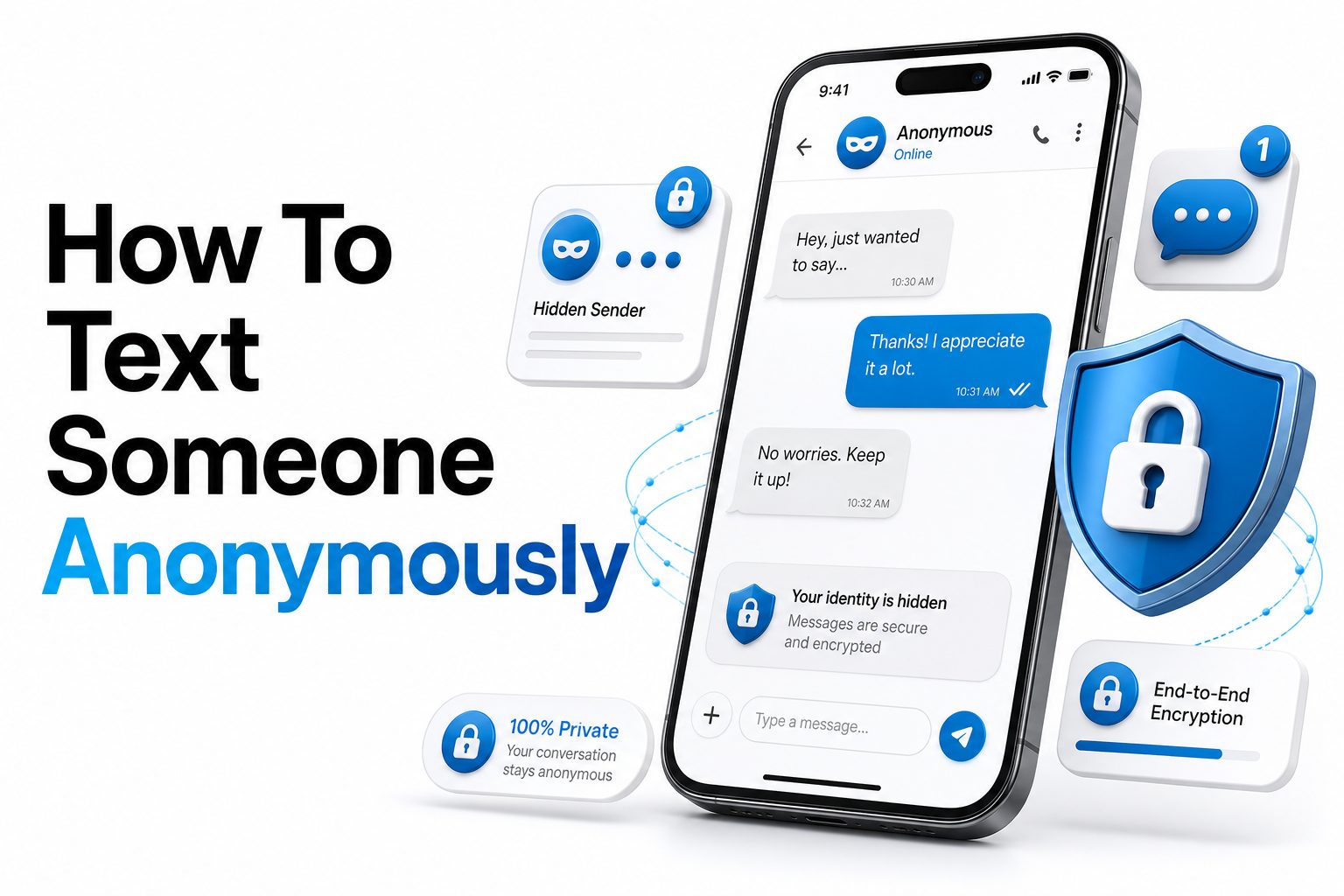
Sending a message without revealing your personal phone number can be useful in more situations than people often realize. You may need to contact a seller, respond to a job lead, protect your privacy during online dating, or send a sensitive tip without exposing your identity. That is why many people search for how to text someone anonymously and want a clear, practical answer.
Anonymous texting should never be used to threaten, harass, impersonate, or deceive someone. It works best as a privacy tool, not a shield for harmful behavior. The right approach depends on your goal, the level of privacy you need, and whether the recipient should be able to reply. This article explains safe methods, common mistakes, legal boundaries, and smart habits that help you keep your personal number private while communicating responsibly.
Why People Send Anonymous Texts
Many people want anonymous texting because their phone number is tied to their identity, accounts, work, and personal life. Sharing it too freely can lead to spam, unwanted calls, or uncomfortable follow-ups, especially when dealing with strangers online or short-term contacts.
There are also valid sensitive situations. Someone may report workplace misconduct, ask a delicate question, contact a business without joining a marketing list, or protect themselves from an intrusive person. In these cases, anonymity can reduce exposure while still allowing necessary communication.
Legal and Ethical Limits of Anonymous Texting
Anonymous texting is legal in many ordinary privacy situations, but legality changes when messages become threatening, abusive, deceptive, or part of fraud. A hidden number does not make a harmful message untraceable, and service providers may respond to lawful requests from authorities.
A simple rule helps: if you would not send the message with your name attached, reconsider sending it anonymously. Responsible anonymous messaging should protect privacy, not pressure, frighten, manipulate, or repeatedly contact someone who does not want communication.
Responsible Uses for Anonymous Texting
- Contacting marketplace buyers or sellers without sharing your main number
- Asking a business a one-time question
- Protecting privacy during early online dating conversations
- Sending a workplace or community safety concern
- Separating personal and professional communication
- Avoiding spam after signing up for temporary services
- Testing alerts, forms, or SMS workflows for a project
Use a Secondary Phone Number App
A secondary number app is often the most practical way to text anonymously. These services give you a separate number for calls and texts, so your real phone number stays private while the recipient still sees a normal phone number.
Popular options include apps that offer temporary numbers, paid private numbers, or business-style messaging tools. Paid services are usually more reliable than free ones because they have better delivery rates, fewer ads, and clearer privacy policies.
Use a VoIP Number for Private Messaging
VoIP numbers work through the internet rather than a traditional mobile carrier. They can be useful for separating your personal identity from casual communication, side projects, rentals, and short-term conversations where you do not want to share your primary number.
The tradeoff is that some websites, banks, and apps block VoIP numbers for verification. If you only need person-to-person texting, a VoIP number may work well. For account verification, check whether the service accepts internet-based numbers before relying on it.
Comparison of Anonymous Texting Options
Method | Best For | Privacy Level | Reply Support | Main Limitation
Secondary number app | Everyday private texting | Medium to high | Yes | Often requires payment
VoIP number | Business or casual privacy | Medium | Yes | Some services block it
Email-to-SMS | Simple one-way messages | Low to medium | Sometimes | Carrier details are required
Prepaid SIM | Stronger number separation | High | Yes | Costs more and needs setup
Secure messaging app | Private chats with contacts | High | Yes | Recipient must use the same app
Use Email-to-SMS Gateways Carefully
Some mobile carriers allow messages to be sent to a phone number through an email-to-SMS gateway. This can hide your phone number, but it may show your email address or other account details unless you use a separate email account.
This method is less reliable than a dedicated texting app because carrier support varies. Messages may arrive late, fail formatting, or get filtered. It is best for low-risk communication, not urgent messages or situations requiring strong privacy.
Use a Prepaid SIM or Separate Device
A prepaid SIM card gives you a separate mobile number that is not your everyday number. This option works well when you need consistent texting over time but do not want the contact connected to your personal phone line.
Privacy depends on how the SIM is purchased, registered, and used. In some places, identity registration is required. Even when it is not, your behavior, contacts, payment method, and device metadata may still create links to you.
Anonymous Texting Safety Checklist
- Use anonymous texting only for lawful, respectful communication
- Avoid threats, harassment, repeated unwanted contact, or impersonation
- Choose a reputable service with a clear privacy policy
- Do not include personal details inside the message
- Use a separate email account when signing up
- Turn off contact syncing when using private number apps
- Avoid logging in with personal social accounts
- Keep records if the message concerns safety or reporting
Protect Your Identity Before Sending
An anonymous number is only one part of privacy. The words you choose can reveal who you are through details, timing, location, writing style, or references only certain people would know. Review your message before sending it.
Avoid mentioning private events, inside jokes, workplace details, or exact schedules unless necessary. If your goal is privacy, keep the message short, factual, and limited to the reason for contact. Less personal detail usually means less exposure.
Choose the Right Tone and Message Length
Anonymous messages can feel suspicious to recipients, even when your reason is legitimate. A respectful tone helps reduce confusion. Be direct about the purpose of the message without pretending to be someone else or creating unnecessary mystery.
Short messages often work better than long ones. For example, a marketplace message can say, “Hi, I am asking about the table listing. Is pickup available Saturday afternoon?” That protects your number while giving the recipient enough context.
H3 Privacy Versus Secrecy
Privacy means limiting unnecessary access to your personal information. Secrecy often suggests hiding behavior from accountability. The difference matters because responsible anonymous texting should still be honest, proportionate, and tied to a legitimate communication need.
A person can protect their number without misleading the recipient. For example, using a separate number for online sales is privacy. Pretending to be a bank, employer, friend, or authority figure is deception and can create serious consequences.
Best Practices for Safer Anonymous Texting
- State the purpose of the message clearly
- Keep the tone calm and respectful
- Do not send repeated messages if there is no response
- Avoid emotional late-night texting
- Do not use anonymous tools during conflicts
- Save important messages when reporting safety concerns
- Use paid tools for reliability when the message matters
- Stop immediately if the recipient asks not to be contacted
Anonymous Texting for Online Marketplaces
Buying and selling online often requires quick communication with strangers. Using a separate number protects your main phone from spam, repeated bargaining, and unwanted contact after the transaction ends. It also keeps your personal identity more contained.
For marketplace conversations, keep messages transactional. Discuss item condition, pickup location, payment method, and timing. Avoid sharing your home address until needed, and consider meeting in a public place. For more privacy practices, see [Internal Link: online marketplace safety tips].
Anonymous Texting for Dating and Social Apps
Early dating conversations can benefit from a separate number, especially before trust is established. It gives you control if the interaction becomes uncomfortable and prevents someone from connecting your number to other accounts or public records.
Still, anonymity should not mean dishonesty. You can simply say you prefer using a private number until you know someone better. Healthy contacts will usually respect that boundary, and anyone who pressures you for personal details is worth reconsidering.
H3 When to Move Away From Anonymous Texting
Once trust is built, continuing to hide basic identity details can create friction. If the relationship becomes personal, professional, or ongoing, it may be better to clarify your communication preferences rather than relying on anonymity indefinitely.
The timing depends on context. A marketplace buyer may never need your real number. A dating contact may reasonably expect more openness after several meetings. A workplace report may require formal channels if the issue needs investigation.
Important Facts About Anonymous Text Messages
- Anonymous does not always mean untraceable
- Free texting sites may collect data or display ads
- Some anonymous messages get blocked as spam
- Paid private number apps usually deliver more reliably
- Phone carriers may keep logs
- Screenshots can be shared by recipients
- Harassing messages can lead to account bans or legal action
- Privacy works best when paired with careful message content
Risks of Free Anonymous Texting Websites
Free anonymous texting websites may look convenient, but they often carry privacy and reliability concerns. Some show intrusive ads, log message content, reuse public numbers, or provide no clear information about how data is handled after sending.
Delivery can also be inconsistent. Messages may be blocked by carriers, marked as spam, or appear with strange sender information. If your message is important, a reputable paid service or separate number app is usually a better choice.
How to Avoid Scams and Unsafe Services
Be cautious with any service that promises total secrecy, asks for unnecessary personal data, or pushes you through suspicious downloads. A legitimate texting tool should explain pricing, privacy practices, data retention, and acceptable use in plain language.
Check recent user reviews, company details, and cancellation terms before paying. Avoid services that require access to your full contacts, photos, or social accounts without a clear reason. Privacy tools should reduce exposure, not collect more information than needed.
H3 Red Flags in Anonymous Texting Apps
Some apps request permissions that do not match their purpose. A texting app may need notification access or microphone access for calling, but it should not need broad access to files, photos, or unrelated accounts for basic SMS messaging.
Also watch for unclear pricing. Free trials that convert quickly, hard-to-cancel subscriptions, or vague credit systems can become expensive. Read the plan details before sending messages, especially if you only need a one-time private number.
Tips for Choosing a Private Texting Service
- Look for clear pricing before signing up
- Read the privacy policy and data retention notes
- Check whether the number supports replies
- Confirm whether the app works in your country
- Avoid services with excessive permissions
- Prefer services with recent positive reviews
- Test delivery with a low-risk message first
- Use a separate email address for registration
Anonymous Texting for Workplace Concerns
Employees sometimes want to report safety issues, harassment, wage problems, or unethical conduct without exposing themselves immediately. Anonymous texting may help start the conversation, especially with a manager, union representative, hotline, or third-party reporting service.
However, serious workplace matters often need documentation and formal channels. Anonymous messages can raise awareness, but they may not be enough for action. Keep dates, facts, screenshots, and names organized in case you later choose to make a formal report.
Anonymous Texting for Safety Situations
If someone feels unsafe, a private number can help communicate without revealing a main phone number. This may apply to leaving a volatile relationship, arranging safe pickup, or contacting a support organization discreetly.
For immediate danger, contact local emergency services rather than relying on anonymous texting. If the situation involves stalking, threats, or abuse, save evidence and consider help from trained advocates. Private messaging can support safety planning, but it should not replace urgent help.
H3 When Anonymous Texting Is Not Enough
Some situations require identity verification, legal reporting, or direct support. Anonymous messages may be ignored if the recipient cannot confirm facts, ask follow-up questions, or assess urgency. That is especially true for emergencies, threats, and official complaints.
If you need action from an employer, school, landlord, or agency, consider using their formal reporting channel. Many organizations offer confidential or anonymous forms that are better suited for sensitive reports than a random text from an unknown number.
Examples of Safe Anonymous Texts
- “Hi, I am asking about the apartment listing. Is it still available for viewing this week”
- “This is a privacy number. I am confirming the pickup time for the desk tomorrow at 3”
- “I want to report a safety concern near the back entrance. The light has been out for three nights”
- “Please use this number for order updates only”
- “I prefer not to share my personal number yet, but I can answer questions here”
How to Write an Anonymous Text That Gets a Reply
A recipient is more likely to respond when the message looks legitimate. Include enough context to explain why you are texting, but avoid unnecessary personal information. Clear purpose, polite wording, and a normal conversational tone make a big difference.
Avoid vague lines like “Do you know who this is” or “I need to tell you something.” Those messages can feel unsettling. A better approach is specific and calm, such as “I am contacting you about your bicycle listing on Main Street.”
How to Manage Replies and Follow-Up
If the recipient replies, keep the conversation within the same private channel until your reason for anonymity changes. Do not switch between multiple anonymous numbers because that can seem suspicious and make the conversation harder to trust.
If they do not reply, avoid sending repeated follow-ups. One polite reminder may be acceptable in ordinary situations, but repeated anonymous messages can cross boundaries quickly. Respect silence, especially if the topic is personal or emotionally charged.
H3 Keeping Records Without Overexposing Yourself
For practical matters, save message threads, timestamps, and transaction details. Records can help resolve disputes, confirm agreements, or support reports. Keep them in a secure place, especially if the topic involves safety, money, or workplace concerns.
At the same time, do not store more than necessary. Delete old conversations when they no longer serve a purpose. Good privacy habits apply to your own device too, especially if other people can access it.
Do and Do Not List for Anonymous Texting
Do:
-
- Be honest about your purpose
- Use a reputable service
- Keep messages short and clear
- Respect no response or refusal
- Protect your own account details
Do not:
- Impersonate another person
- Send threats or insults
- Use anonymity to pressure someone
- Share private information about others
- Assume anonymous means impossible to trace
Common Mistakes to Avoid
One common mistake is choosing the first free website that appears in search results. Many low-quality services offer weak privacy, poor delivery, and little accountability. Convenience should not come at the cost of exposing your data.
Another mistake is writing in a way that gives away your identity. Specific personal references, emotional wording, and unusual phrasing can identify you even when your number is hidden. Review the message from the recipient’s perspective before sending it.
Better Alternatives to Anonymous Texting
Sometimes a private text is not the best tool. A secure messaging app, anonymous reporting form, business email alias, or customer support ticket may fit better. The right channel depends on the seriousness and purpose of your message.
For sensitive reports, formal anonymous forms often provide better protection and routing. For casual privacy, a second number is easier. For account security, see [Internal Link: protect your phone number online] for practical steps beyond texting.
H3 Using Secure Messaging Apps
Secure messaging apps can protect message content through encryption, but they usually require both people to use the same platform. Some also require a phone number for signup, although privacy settings may limit who can see it.
These apps are best when the recipient is known and willing to use the same service. They are less useful for contacting strangers, businesses, or marketplace sellers who expect ordinary SMS communication.
Quick Decision Guide
- Use a second number app for everyday private texting
- Use a prepaid SIM for longer-term number separation
- Use secure messaging for private chats with trusted contacts
- Use formal reporting tools for serious complaints
- Avoid free anonymous sites for sensitive messages
- Do not use anonymous texting for conflict, revenge, or repeated contact
Conclusion
Anonymous texting can be useful when it protects privacy, creates healthy boundaries, or helps someone communicate safely. The best method depends on the situation: secondary number apps are convenient, prepaid numbers offer stronger separation, and secure messaging apps work well when both people agree to use them.
The most important part is intent. Private communication should be respectful, lawful, and clear. A hidden number does not remove responsibility, and careless wording can expose identity or make the recipient uncomfortable. Before sending, choose a reliable service, limit personal details, and make sure the message has a legitimate purpose.
If you came here searching for how to text someone anonymously, the safest answer is to use a trusted private number tool, write a brief and honest message, and respect the other person’s boundaries at every step.
FAQ
Is anonymous texting legal?
Anonymous texting is generally legal when used for privacy, business, safety, or ordinary communication. It can become illegal if used for threats, harassment, fraud, impersonation, stalking, or repeated unwanted contact.
Can anonymous texts be traced?
Yes, anonymous texts may be traceable through app records, carrier logs, payment details, device data, or legal requests. An anonymous sender name does not guarantee complete invisibility or protection from consequences.
What is the safest way to text privately?
A reputable paid secondary number app is usually the safest practical option for most people. It keeps your main number private while allowing normal two-way communication and better reliability than free texting websites.
Can I send an anonymous text for free?
Some websites and apps offer free anonymous texting, but they may have poor delivery, ads, data collection, or limited privacy controls. Avoid using free tools for sensitive or important messages.
Should I tell someone I am using a private number?
In many cases, yes. A simple note like “I use this number for privacy” can build trust without revealing your main phone number. Honesty helps prevent confusion and keeps the conversation respectful.
0 Comments